Part 2 of 2: Supervisory Flexibility Explained: How to Plan for 3 April 2028
Key Takeaways
- Firms should treat supervisory flexibility as a controlled transition, not a reason to delay implementation. PS26/15 allows firms to realise some benefits before April 2028, but the relief is selective. Firms should use flexibility where the business case is clear, wait where validations or dependencies are not ready, and continue preparing for the mandatory future state.
- Firms do not need to adopt every available flexibility. The appropriate approach will depend on factors including reporting volumes, the cost of maintaining current logic, reporting-channel readiness and the risk of inconsistent treatment across systems or regulatory regimes.
- Governance and evidence should support every PS26/15 change. Firms should document the specific PS26/15 provision and condition supporting each change and maintain formal change records covering the FCA position, effective date, owner, dependencies and testing evidence.
- Technology, vendors and controls need to be aligned before reporting changes are made. Firms should obtain validation and schema roadmaps from their ARM or reporting vendor, test whether changes create technical failures, and only update procedures, exception handling and reconciliation rules once the relevant system changes have been deployed.
- Preparation for 3 April 2028 should be phased rather than left until go-live. The guide maps implementation from governance decisions in 2026 through impact assessment, development and testing in 2027, operational readiness in late 2027 and early 2028, and final migration to the new schema, rules, validations and field set on 3 April 2028.
Understanding what can change under FCA PS26/15 is only the first step. Firms also need to decide which flexibilities to adopt, manage the legal and technical dependencies, update controls and prepare their reporting infrastructure for the new regime taking effect on 3 April 2028. The guide sets out a phased implementation journey covering governance decisions, technical mobilisation, impact assessment, build and testing, operational readiness and go-live.
Part 2 of our two-part Supervisory Flexibility Guide focuses on how firms can manage that transition in practice. If you have not already, read Part 1 to understand what firms can change now and what must wait or download the complete guide for both parts in one place. Email info@qomplyreporting for the full guide.
How Qomply can help
Qomply helps financial firms achieve accurate, compliant transaction reporting across global regulatory regimes, while streamlining the operational and audit demands of regulatory reporting.
Our proprietary technology combines AI, automation and advanced data analytics to deliver scalable, audit-ready reporting intelligence. Through forensic-level quality assurance and streamlined reconciliation, Qomply helps firms strengthen data quality and reporting accuracy, automate controls, simplify audit processes and lower overall reporting costs.
Our technology provides greater oversight and operational efficiency while reducing the demands on internal teams.
For firms seeking to outsource their regulatory reporting operations, Qomply also offers a fully managed service. Combining our technology with deep regulatory expertise, Qomply Managed Services operates as an extension of, or alternative to, an in-house reporting function. This flexible model enables firms to outsource reporting operations while retaining the option to bring activities in-house as their own capabilities and resources evolve.
MiFIR | EMIR | SFTR | CFTC | CSA | MAS | ASIC | HKMA
Frequently asked questions
Firms should take a phased approach to implementation, beginning with governance decisions and technical mobilisation before moving through detailed impact assessment, development, testing and operational readiness. By 3 April 2028, firms need to be ready to use the new reporting schema, rules, validations and field set.
No. Firms do not need to adopt every flexibility. Decisions should consider reporting volumes, the cost of maintaining existing reporting logic, reporting-channel readiness and the risk of creating inconsistent treatment across systems or regulatory regimes.
Firms should document the specific PS26/15 provision and conditions supporting each change and use formal change records covering the FCA position, effective date, ownership, dependencies and testing evidence. Senior management should also understand that requirements outside the areas covered by the FCA's flexibility remain unchanged.
Firms should obtain a dated roadmap from their ARM or reporting vendor covering validation changes and future-schema delivery. They should also test that stopping the population of particular fields does not result in file, schema or proprietary validation failures.
The guide recommends developing and testing reporting logic, interfaces and controls during 2027, including unit, integration, regression, negative and volume testing, with conformance testing where required. In late 2027 and early 2028, firms should move into operational readiness through dress rehearsals or parallel testing, staff training, governance sign-off and go-live support planning.
Expert resources on regulatory reporting

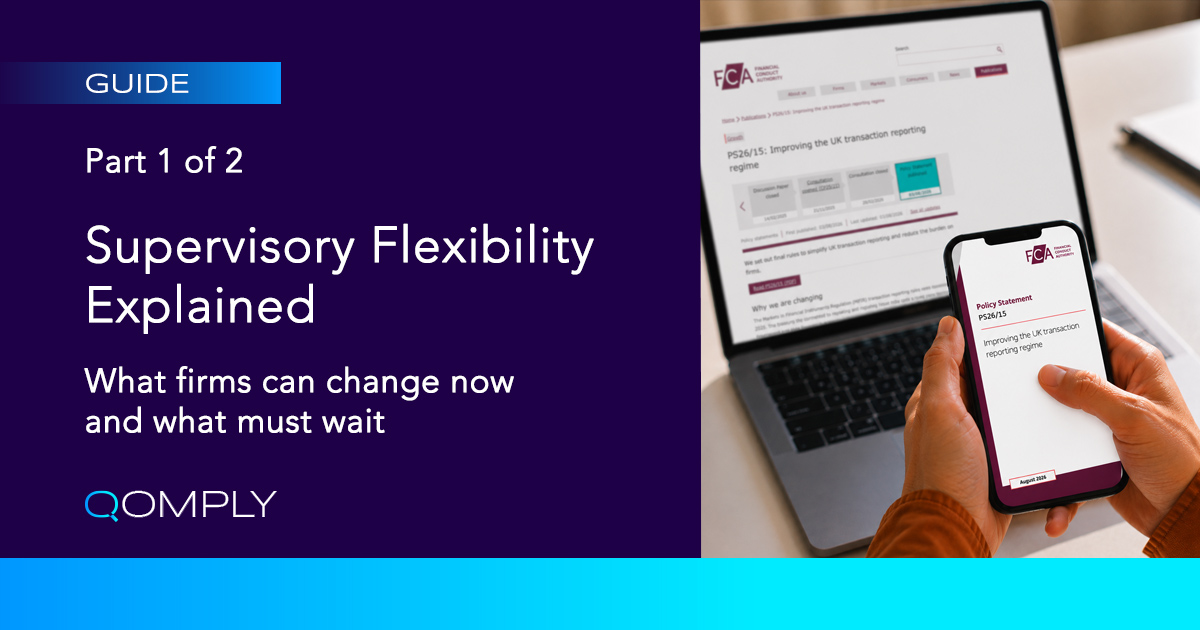 Guides
Part 1 of 2 Supervisory Flexibility Explained: What Firms Can Change Now and What Must Wait
 News
NewsA Front-Row Seat: From the Financial Crisis to the FCA, Nearly 20 Years On.
 Videos
FCA & Bank of England Taskforce: Reshaping Transaction Reporting for the Future
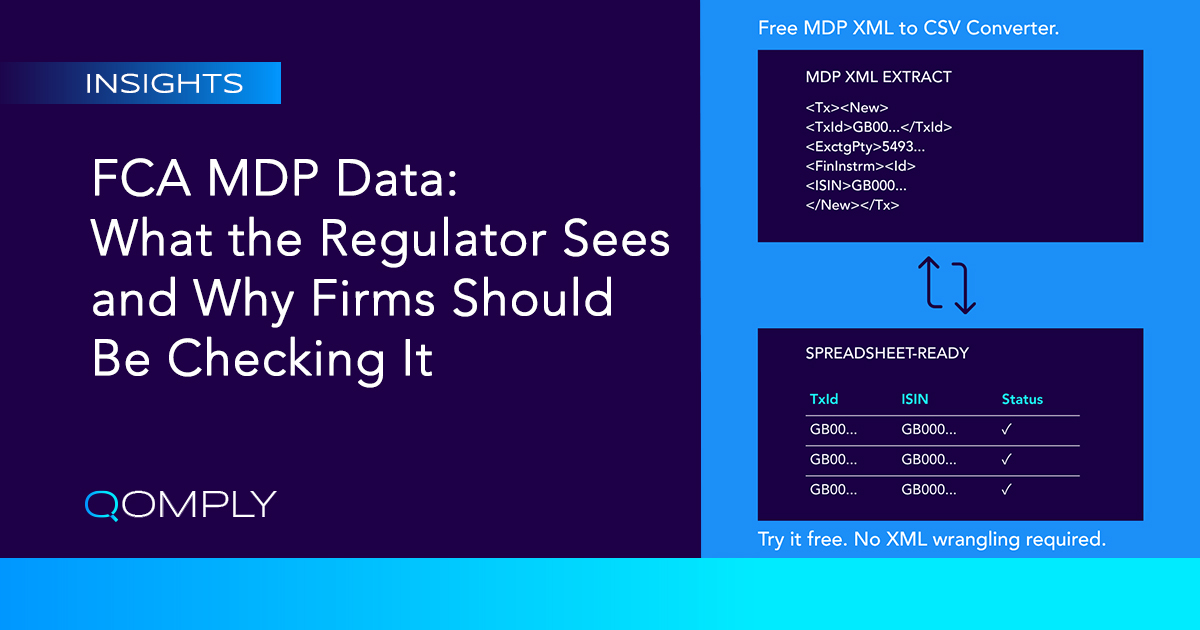 Insights
FCA MDP Data: What the Regulator Sees and Why Firms Should Be Checking It
 Insights
PS26/15 Is Here: What Firms Should Really Take Away From the FCA’s Final MiFIR Transaction Reporting Reforms
Purpose-built solutions and services for regulatory reporting
Designed to improve accuracy, reduce risk, and support confident transaction reporting.