Qomply Survey 2026: 90% Support FCA MiFID Reform (CP25/32)
Key Takeaways
- Broad Support: Survey results indicate strong backing for CP25/32, with respondents expecting simpler scope and fewer fields to reduce reporting costs.
- Savings Concentration: Expected efficiencies cluster around scope reduction, shorter back-reporting, fewer fields, and removal of many currently reportable EU-only instruments.
- CSSR Skepticism: Conditional single-sided reporting remains contentious, as respondents doubt expanded CSSR alone will produce meaningful operational or commercial efficiencies.
- Measured Recalibration: The findings portray the consultation as a pragmatic reset of UK MiFID reporting rather than a wholesale reduction in oversight.
- Consultation Urgency: With responses due by 20 February 2026, firms face a limited window to convert broad support into actionable regulatory feedback.
Following the FCA's Consultation Paper, CP25/32: Improving the UK transaction reporting regime, Qomply's 2026 industry survey reveals that 90% of firms expect the FCA's proposed MiFID transaction reporting reforms to reduce costs and streamline compliance. The findings highlight strong industry support for simplifying reporting scope, data requirements, and operational complexity under the UKs future reporting regime.
A recent Qomply survey of market practitioners shows strong confidence that the FCA's proposed changes to the UK MiFID transaction reporting regime will reduce reporting costs. Most respondents expect a positive or very positive impact, and notably, none anticipate an increase in costs.
This sentiment suggests the FCA has struck the right balance. More than seven years after MiFID II went live, the regulator is now signalling a measured reboot of the UKs reporting obligations.
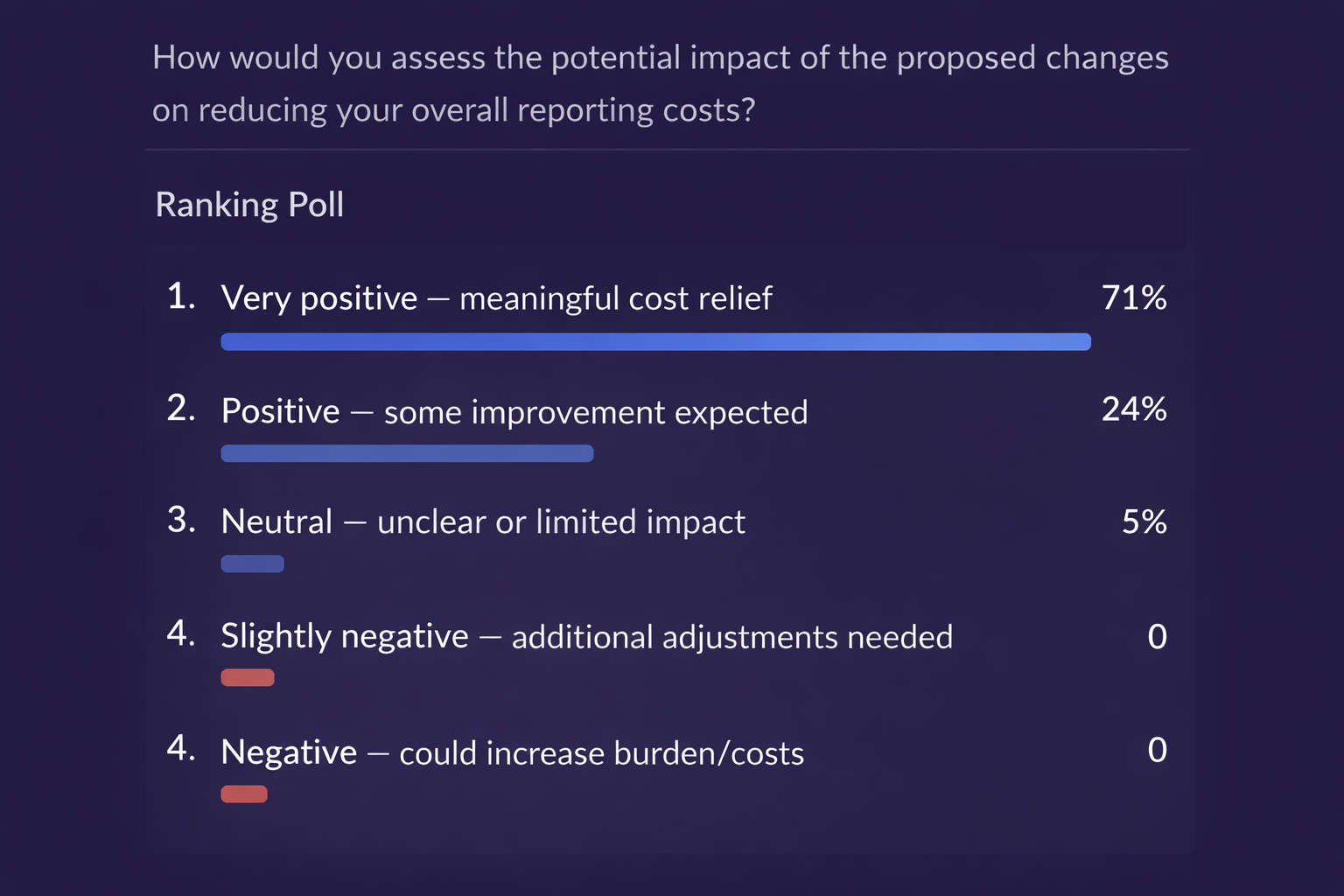
Poll question: How would you assess the potential impact of the proposed changes on reducing your overall reporting costs?
When Qomply asked which reforms would generate the greatest efficiency gains, responses clustered around four key changes:
- Removing instruments traded solely on EU venues
- Reducing the back-reporting window from five to three years
- Reducing the number of reportable and reference-data fields
- Removing FX derivatives from MiFID transaction reporting scope
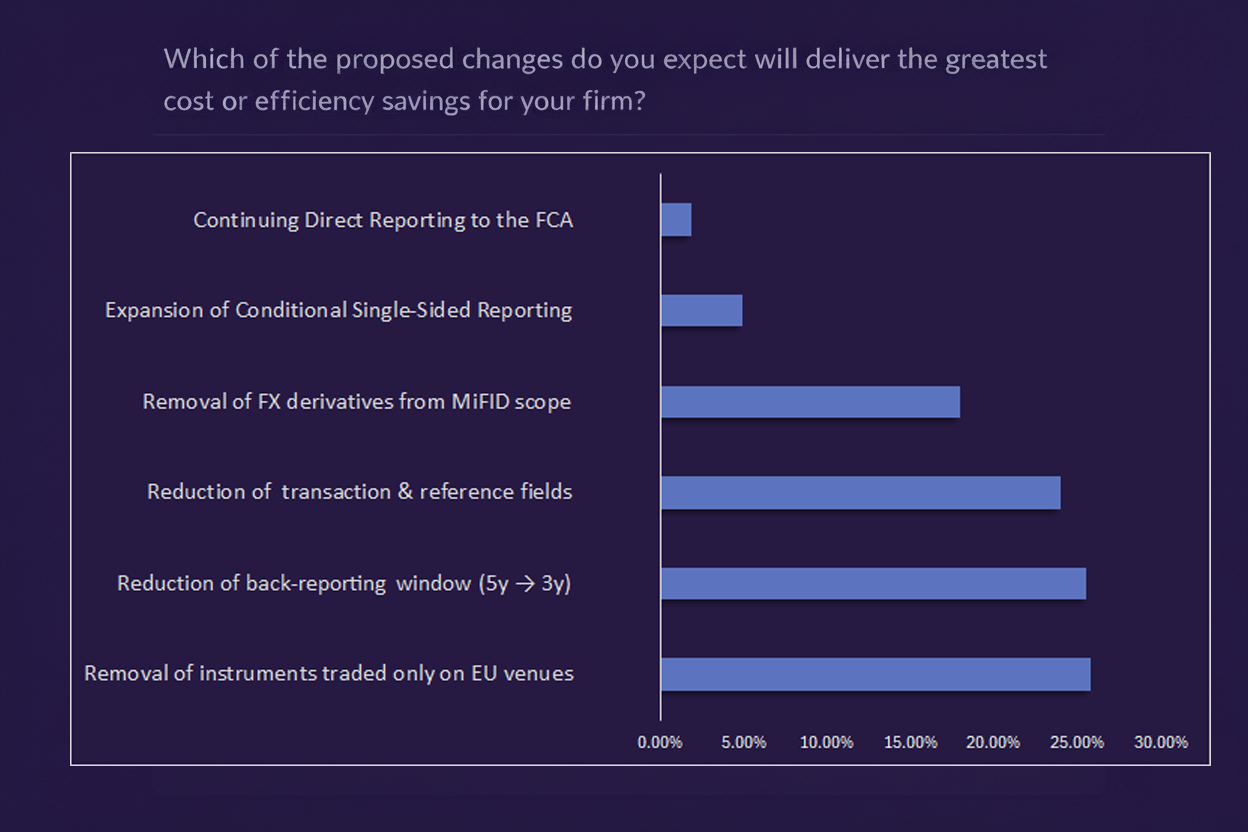
Poll question: Which of the proposed changes do you expect will deliver the greatest cost or efficiency savings for your firm?
The FCA is also proposing a more flexible approach to Conditional Single-Sided Reporting (CSSR) to encourage greater industry uptake. However, the survey reveals deep scepticismaround 90% of respondents questioned whether CSSR will deliver meaningful benefits. Market adoption may ultimately depend on how sell-side firms and venues respond, and at what commercial cost to counterparties.
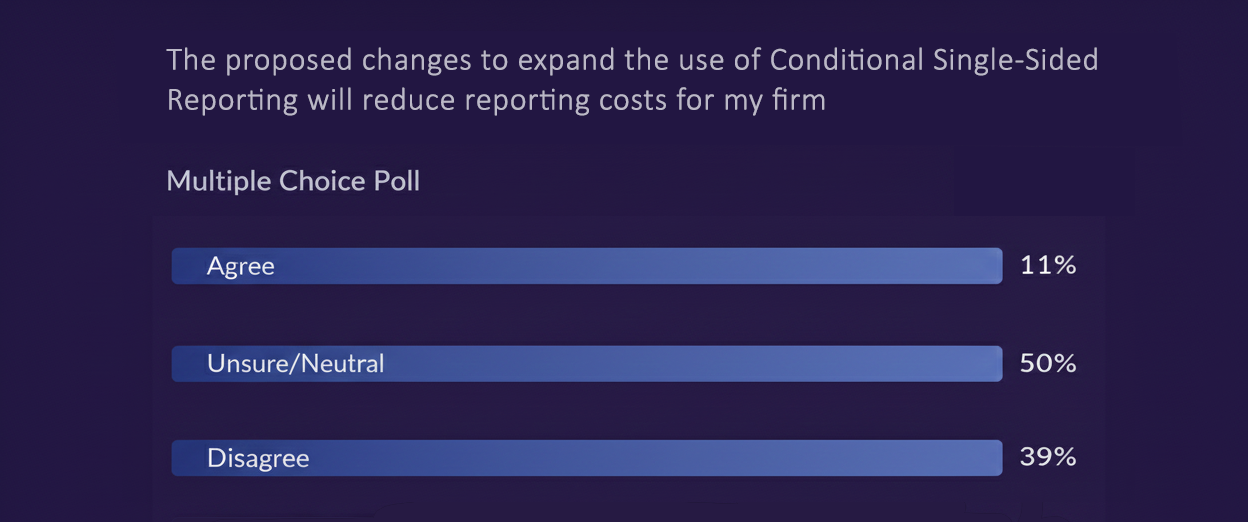
Poll question: The proposed changes to expand the use of Conditional Single-Sided Reporting will reduce reporting costs for my firm.
Responses to the FCA consultation are due by 20 February 2026.
For a more indepth perspective of the proposed reforms and their practical implications for firms, see Qomply's overview: Key Proposed Changes to Improve MiFID (CP25/32)
You can also read the FCA's consultation paper in full here: Consultation Paper (CP25/32): Improving the UK Transaction Reporting Regime
How Qomply can help
Qomply’s MiFID Transaction Reporting solutions will incorporate flags and warnings to highlight potential gaps arising from the new requirements, once finalised. In addition, we will be offering a standalone Quality Assurance environment to enable testing well in advance of go-live to support gap analysis and provide a practical testing framework ahead of implementation.
Frequently asked questions
It found strong support, with 90% of respondents expecting the proposed reforms to reduce costs and streamline compliance. The article says none of the respondents expected reporting costs to increase.
The reforms most associated with savings were removing EU-only instruments, cutting back-reporting from five years to three, reducing reportable and reference-data fields, and removing FX derivatives from MiFID scope. The article groups responses around those four changes.
It says respondents were sceptical that expanded CSSR would deliver meaningful benefits. The article notes that around 89% either disagreed or were unsure/neutral that CSSR would materially reduce costs for their firms.
Responses were due by 20 February 2026. The article states that deadline explicitly near the end of the piece.
They should review the consultation and turn that support into concrete feedback before the response deadline. The article also points readers to Qomply's separate overview of the reforms for a more detailed practical perspective.
Purpose-built solutions and services for regulatory reporting
Designed to improve accuracy, reduce risk, and support confident transaction reporting.